
Alesis Recital
A practical digital piano with semi-weighted keys and 88 keys, best judged on how the keys feel for the way you play.
The right beginner digital piano makes learning easier and more enjoyable, and the wrong one builds bad habits you have to unlearn later. This guide covers what beginners actually need and which models we rate.
For a beginner the best choice is a digital piano with fully weighted, hammer-action keys, a clear and pleasant piano sound, and a headphone socket so you can practise without disturbing anyone. You do not need hundreds of voices or backing rhythms to learn - those are nice extras, not essentials. Get the key feel right first, because that is what builds proper technique.
Three things matter most when you are starting out. First, weighted keys: practising on a properly weighted, hammer-action keybed builds the finger strength and control you will rely on for the rest of your playing. Second, a sound you enjoy, so you want to sit down and play. Third, the ability to practise quietly, which usually means a headphone socket - a huge help in a UK home or flat, and at unsociable hours. Everything else is a bonus.
Many beginner pianos come loaded with extra voices, drum rhythms, recording features and built-in lessons. These can be fun and occasionally useful, but none of them teach you to play - regular practice on a good action does. Bluetooth or USB connectivity is genuinely handy if you want to use a learning app or follow online tutorials, so it is worth having, but treat it as a plus rather than a deciding factor. Do not pay extra for features you will rarely touch at the expense of the key feel.
This is the decision that trips up the most beginners. Fully weighted, hammer-action keys feel like an acoustic piano and let you control volume by how hard you press - exactly the technique you are trying to learn. Semi-weighted keys have some resistance but feel lighter and springier, while unweighted (synth-action) keys feel like a cheap keyboard. If you are serious about learning piano, choose fully weighted keys. If your budget is very tight, a weighted action should still come before extra features. See our [digital piano buying guide](/digital-piano-buying-guide-uk/) for how the key actions compare.
A full-size piano has 88 keys, and learning on the full range means your music and your muscle memory transfer directly to any piano. You can begin on a smaller keyboard, and for very young children a shorter keybed can be less daunting, but most learners are better served buying 88 keys from the start so they never run out of range or have to upgrade.
A practical digital piano with semi-weighted keys and 88 keys, best judged on how the keys feel for the way you play.

A practical digital piano with weighted keys, best judged on how the keys feel for the way you play.

A practical digital piano with fully weighted hammer-action keys and 88 keys, best judged on how the keys feel for the way you play.

A practical digital piano with graded hammer action (fully weighted), best judged on how the keys feel for the way you play.

A practical digital piano with hammer-action weighted keys, best judged on how the keys feel for the way you play.
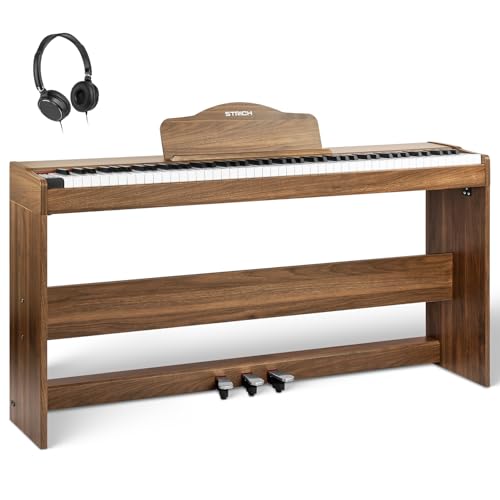
A practical digital piano with fully weighted hammer-action keys and 88 keys, best judged on how the keys feel for the way you play.
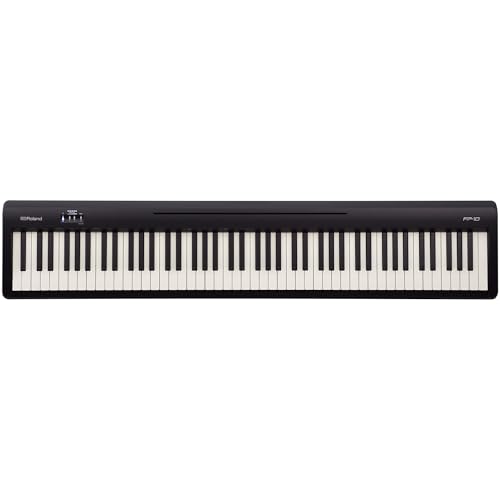
A practical digital piano with 88 keys, best judged on how the keys feel for the way you play.

A practical digital piano with hammer-action weighted keys, best judged on how the keys feel for the way you play.

A practical digital piano with graded hammer action (fully weighted) and 88 keys, best judged on how the keys feel for the way you play.

A practical digital piano with 88 keys, best judged on how the keys feel for the way you play.
Fully weighted, hammer-action keys, a pleasant piano sound, and a headphone socket for quiet practice. Those three things matter far more than extra voices, rhythms or built-in lessons when you are starting out.
Yes. Practising on weighted, hammer-action keys builds the finger strength and control you need, and it means your technique transfers straight to a real piano. Unweighted keyboards feel easier at first but encourage habits you later have to unlearn.
An 88-key instrument matches a full-size piano and means you never run out of range as you progress. You can start on fewer keys, but most learners are better off with 88 from the outset to avoid upgrading later.
Our top pick is the Alesis Recital (our score 9.6/10) - A practical digital piano with semi-weighted keys and 88 keys, best judged on how the keys feel for the way you play..