
Alesis Recital
A practical digital piano with semi-weighted keys and 88 keys, best judged on how the keys feel for the way you play.
A good digital piano gives you the feel and sound of an acoustic without the price, the tuning bills or the floor space. This guide explains how to choose the right one in the UK, what genuinely matters, and which models we rate now.
For most UK buyers the best all-round choice is an 88-key digital piano with fully weighted, hammer-action keys, a sound you are happy to play for hours, and a built-in speaker plus a headphone socket for silent practice. Match the piano to how you will use it - learning at home, moving it between rooms, or playing on stage - rather than chasing the longest feature list. Spend what you can on the key action and the sound engine; they shape how the instrument feels and sounds far more than extra voices or rhythms.
The single biggest difference between a real piano and a cheap keyboard is the key action. On an acoustic piano each key lifts a hammer, so the keys have weight and resistance that builds finger strength and lets you control how loud each note is. A good digital piano recreates this with a fully weighted, hammer-action keybed, often graded so the low keys feel slightly heavier than the high ones, just like the real thing. Anything described as semi-weighted or unweighted (synth-action) will feel lighter and springier, which is fine for casual play but builds bad habits if you are learning properly. If you want one rule of thumb, it is this: buy weighted, hammer-action keys. See our [digital piano buying guide](/digital-piano-buying-guide-uk/) for the full explanation.
Learners and home players want fully weighted keys, a good piano sound and a headphone socket so practice does not disturb the household. Players short on space, or who move the piano around, should look at slim, portable models that sit on a stand or table. Furniture-style (console) pianos with a built-in cabinet and three pedals look the part in a living room but are not designed to be carried about. Stage and gigging players want a portable instrument that is light, robust and quick to set up. Decide which of these you are before you compare specs.
It is tempting to judge a digital piano on the headline number of voices or the size of its sample, but the experience of playing one comes from how the key action and sound engine work together. A realistic instrument responds to how hard you strike each key (touch sensitivity), lets notes ring and decay naturally, and reproduces the small details a real piano makes. Built-in speakers also colour the sound a lot - the same instrument can sound thin through small speakers and rich through good headphones. Where you can, try before you buy, or play through headphones to judge the core tone fairly.
A practical digital piano with semi-weighted keys and 88 keys, best judged on how the keys feel for the way you play.

A practical digital piano with weighted keys, best judged on how the keys feel for the way you play.

A practical digital piano with fully weighted hammer-action keys and 88 keys, best judged on how the keys feel for the way you play.

A practical digital piano with graded hammer action (fully weighted), best judged on how the keys feel for the way you play.

A practical digital piano with hammer-action weighted keys, best judged on how the keys feel for the way you play.
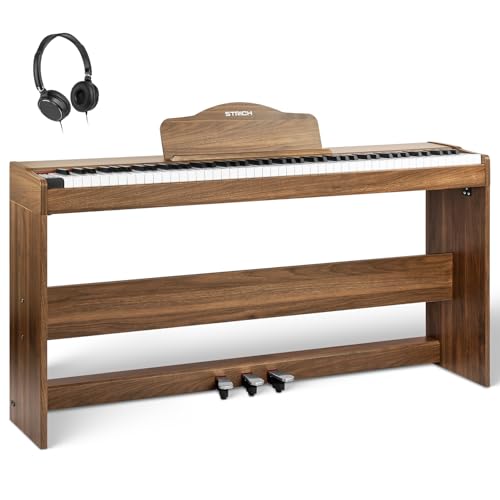
A practical digital piano with fully weighted hammer-action keys and 88 keys, best judged on how the keys feel for the way you play.
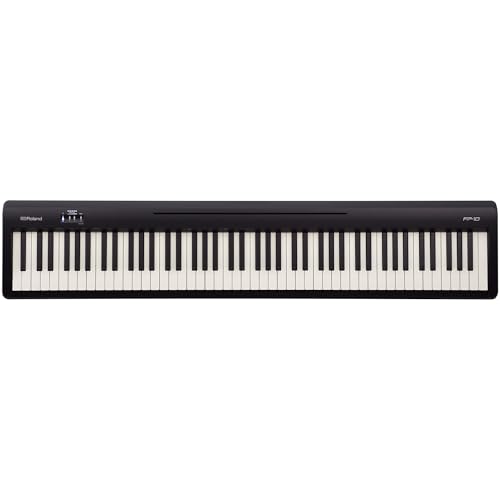
A practical digital piano with 88 keys, best judged on how the keys feel for the way you play.

A practical digital piano with hammer-action weighted keys, best judged on how the keys feel for the way you play.

A practical digital piano with graded hammer action (fully weighted) and 88 keys, best judged on how the keys feel for the way you play.

A practical digital piano with 88 keys, best judged on how the keys feel for the way you play.
An 88-key model with fully weighted, hammer-action keys, a piano sound you enjoy, and a headphone socket for silent practice. That combination suits learners and home players, and only stage or furniture-focused buyers need to prioritise differently.
Spend what you can on the key action and sound, as they shape the playing experience most. Budget models can be a fine starting point, but check that the keys are genuinely weighted and the main piano voice sounds natural before you decide on price alone.
A full-size acoustic piano has 88 keys, and most music is written with that range in mind. Beginners can start on fewer keys, but if you plan to progress, an 88-key instrument saves you upgrading later.
Our top pick is the Alesis Recital (our score 9.6/10) - A practical digital piano with semi-weighted keys and 88 keys, best judged on how the keys feel for the way you play..