
Alesis Recital
A practical digital piano with semi-weighted keys and 88 keys, best judged on how the keys feel for the way you play.
As you progress beyond the basics, you need a piano whose action and sound can keep up. This guide covers what intermediate players should look for and which pianos we rate.
For intermediate players, choose a piano with a refined, fully-weighted action and a genuinely expressive sound engine that responds to nuance. You have outgrown the most basic actions, so prioritise key feel and dynamic response, good polyphony for complex pieces, and a natural sound. This usually means stepping up from entry-level into the mid-range, where the action and sound reward developing technique.
As your technique develops, you notice the limits of a basic action and sound: you want keys that respond to subtle dynamics and a tone that rewards expressive playing. Polyphony (how many notes can sound at once) also matters more for complex, pedal-heavy pieces. An intermediate piano should grow with you, not hold you back as your playing improves.
Polyphony is the number of notes a piano can produce simultaneously, including sustained and pedalled notes. Beginners rarely hit the limit, but intermediate pieces with lots of sustain and complex harmony can, causing earlier notes to cut off. A higher polyphony count avoids this, which is why it becomes a more important spec as your repertoire grows more demanding.
This level suits players who have progressed beyond beginner pieces and want an instrument that keeps up, as well as ambitious beginners buying for the long term. If you are just starting, a good weighted beginner piano is enough for now; if you are advanced or performing, you may look at premium home or stage pianos.
A practical digital piano with semi-weighted keys and 88 keys, best judged on how the keys feel for the way you play.

A practical digital piano with weighted keys, best judged on how the keys feel for the way you play.

A practical digital piano with fully weighted hammer-action keys and 88 keys, best judged on how the keys feel for the way you play.

A practical digital piano with graded hammer action (fully weighted), best judged on how the keys feel for the way you play.

A practical digital piano with hammer-action weighted keys, best judged on how the keys feel for the way you play.
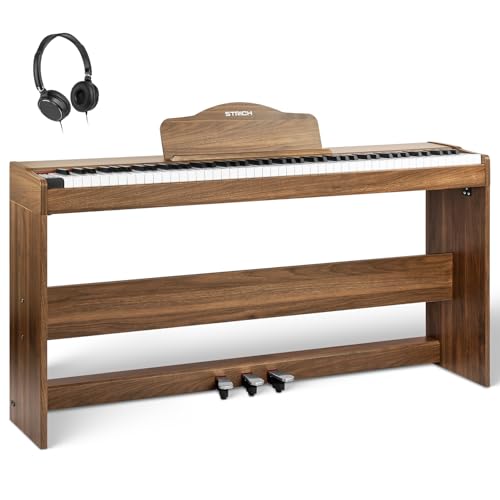
A practical digital piano with fully weighted hammer-action keys and 88 keys, best judged on how the keys feel for the way you play.
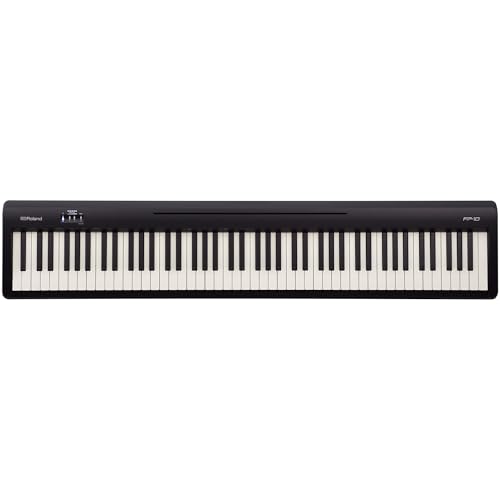
A practical digital piano with 88 keys, best judged on how the keys feel for the way you play.

A practical digital piano with hammer-action weighted keys, best judged on how the keys feel for the way you play.
One with a refined, fully-weighted action, an expressive sound that responds to nuance, and good polyphony for complex pieces. Intermediate players have outgrown basic actions, so prioritise key feel and dynamic response.
Polyphony is how many notes can sound at once, including sustained and pedalled notes. Beginners rarely hit the limit, but complex intermediate pieces with lots of sustain can, so higher polyphony matters more as you progress.
When you notice the action and sound limiting your developing technique - keys that do not respond to nuance, or notes cutting off in complex passages. An intermediate piano with a refined action and higher polyphony will grow with you.
Our top pick is the Alesis Recital (our score 9.6/10) - A practical digital piano with semi-weighted keys and 88 keys, best judged on how the keys feel for the way you play..