
Alesis Recital
A practical digital piano with semi-weighted keys and 88 keys, best judged on how the keys feel for the way you play.
Buying your first digital piano is mostly about getting a few key things right and ignoring the marketing noise. This guide explains weighted versus semi-weighted keys, how many keys you need, and what really makes a digital piano feel and sound like the real thing.
Buy an 88-key digital piano with fully weighted, hammer-action keys, a main piano sound you enjoy, and a headphone socket for quiet practice. Those few things matter more than any number of extra voices, rhythms or built-in lessons. Spend your budget on the key action and sound first, and treat everything else as a bonus.
This is the most important decision, so it is worth understanding clearly:
Graded hammer action goes further still, making the bass keys slightly heavier than the treble, just like a real grand. If in doubt, choose fully weighted keys.
A full-size acoustic piano has 88 keys, and most piano music is written with that range in mind. An 88-key digital piano means your music and your muscle memory transfer directly to any piano. You can start on 76, 73 or 61 keys if budget or space is tight, or for a young child, but you may run out of range as you progress and end up upgrading. For most buyers, 88 keys from the start is the safer choice.
Feel comes mainly from the key action combined with touch sensitivity - the keys responding to how hard you play, so you can control the volume and shape each phrase. A weighted, hammer-action keybed with good touch sensitivity feels closest to a real piano. The number of voices, the size of the display and the list of rhythms make no difference to feel at all. If you only judge a digital piano on one thing, judge it on the action under your fingers.
Sound comes from the sound engine and how it is reproduced. A good main grand-piano voice should sound natural, ring and decay realistically, and respond to your touch. Polyphony - the number of notes the piano can sound at once - matters for busy, sustained passages with the pedal down, because too little can cut notes off; higher polyphony gives more headroom, but it is only one factor among several. Crucially, the speakers colour the sound a lot: the same instrument can sound thin through small built-in speakers and rich through good headphones, so judge the core tone through headphones where you can.
Built-in speakers are convenient for casual playing, but in a UK home or flat a headphone socket is essential for practising without disturbing anyone, and it also lets you hear the true tone of the instrument. Connectivity matters if you want to plug into a computer or tablet: USB or MIDI lets you use learning apps, follow tutorials and record, and some pianos add Bluetooth for wireless connection to apps. None of this teaches you to play, but it can make practice more engaging and is genuinely useful.
The piano is only part of the cost. To play comfortably you will usually want a stand (unless the model has a built-in cabinet), a sustain pedal, a bench at the right height, and a decent pair of headphones for silent practice. Portable pianos often sell these separately, so factor them in when you compare prices - a cheap piano with extras can cost as much as a dearer one that includes them.
A practical digital piano with semi-weighted keys and 88 keys, best judged on how the keys feel for the way you play.

A practical digital piano with weighted keys, best judged on how the keys feel for the way you play.

A practical digital piano with fully weighted hammer-action keys and 88 keys, best judged on how the keys feel for the way you play.

A practical digital piano with graded hammer action (fully weighted), best judged on how the keys feel for the way you play.

A practical digital piano with hammer-action weighted keys, best judged on how the keys feel for the way you play.
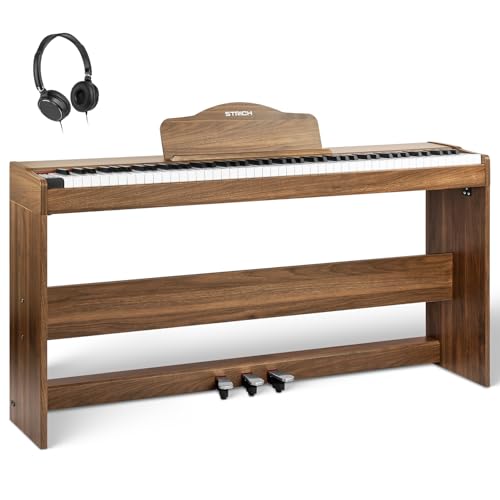
A practical digital piano with fully weighted hammer-action keys and 88 keys, best judged on how the keys feel for the way you play.
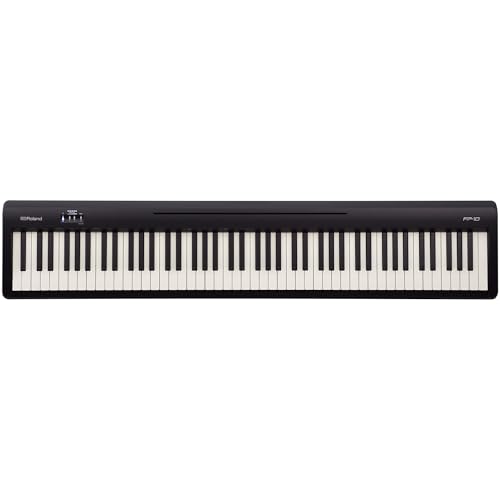
A practical digital piano with 88 keys, best judged on how the keys feel for the way you play.

A practical digital piano with hammer-action weighted keys, best judged on how the keys feel for the way you play.
Fully weighted, hammer-action keys use a weighted mechanism to recreate the feel of an acoustic piano. Semi-weighted keys add some resistance, usually from springs, but feel lighter and springier. Weighted keys are better for building proper piano technique and for expressive playing.
A full-size piano has 88 keys, and most music is written for that range, so 88 keys means your playing transfers to any piano. You can start on fewer keys if budget or space is tight, but many players end up upgrading later.
Feel comes from a weighted, hammer-action key action with touch sensitivity, and sound comes from a natural sound engine - judged through headphones, since speakers colour the tone. The number of extra voices and rhythms makes no difference to either.
Usually a stand (unless the piano has a built-in cabinet), a sustain pedal, a bench at the right height, and headphones for quiet practice. Portable pianos often sell these separately, so include them when comparing prices.
Our top pick is the Alesis Recital (our score 9.6/10) - A practical digital piano with semi-weighted keys and 88 keys, best judged on how the keys feel for the way you play..