
Alesis Recital
A practical digital piano with semi-weighted keys and 88 keys, best judged on how the keys feel for the way you play.
Digital pianos and keyboards look similar but are built for different purposes. This guide explains the key differences so you buy the right instrument for learning piano or making music.
Choose a digital piano to learn and play piano - it has 88 fully-weighted keys and an authentic piano sound and feel. Choose a keyboard for versatility, portability and lots of sounds and rhythms at a lower price, but with lighter, usually unweighted keys. If piano technique is your goal, a digital piano is the right tool; if you want a fun, flexible all-rounder, a keyboard suits.
This is the core difference. A digital piano has fully-weighted, hammer-action keys that mimic an acoustic piano and build proper technique. A keyboard usually has lighter, unweighted (synth-action) keys, which are easier to press but do not develop the finger strength and control piano playing needs. For learning piano, the weighted action of a digital piano matters most.
A digital piano focuses on authentic acoustic piano sound (plus a few related voices), aimed at playing piano well. A keyboard offers hundreds of voices, rhythms and backing features, aimed at versatility and fun across styles. Neither is better overall - it depends whether you want to play piano properly or explore many sounds and accompaniments.
Digital pianos almost always have the full 88 keys; keyboards often have 61 or 76, saving space and cost. For piano learning, 88 keys let you play the full repertoire; for casual or portable music-making, fewer keys can be fine. Consider whether you need the full range or prefer a smaller, lighter instrument.
Pick a digital piano if you want to learn and play piano with proper technique and an authentic feel. Pick a keyboard if you want versatility, lots of sounds, portability and a lower price, and are not focused on classical piano technique. Many beginners who are serious about piano are better served by a weighted digital piano from the start.
A practical digital piano with semi-weighted keys and 88 keys, best judged on how the keys feel for the way you play.

A practical digital piano with weighted keys, best judged on how the keys feel for the way you play.

A practical digital piano with fully weighted hammer-action keys and 88 keys, best judged on how the keys feel for the way you play.

A practical digital piano with graded hammer action (fully weighted), best judged on how the keys feel for the way you play.

A practical digital piano with hammer-action weighted keys, best judged on how the keys feel for the way you play.
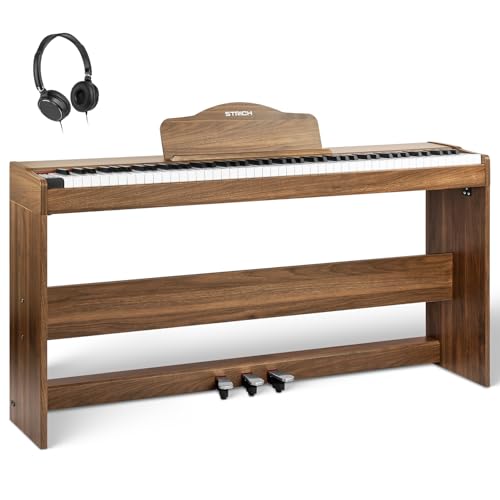
A practical digital piano with fully weighted hammer-action keys and 88 keys, best judged on how the keys feel for the way you play.
A digital piano has 88 fully-weighted keys and an authentic piano sound and feel, built for learning piano. A keyboard usually has lighter, unweighted keys and many voices and rhythms, built for versatility and fun at a lower price.
A digital piano, if piano technique is your goal - its fully-weighted, hammer-action keys build the finger strength and control piano needs. A keyboard suits versatility and casual music-making but lacks the realistic weighted feel.
You can start, but a keyboard's lighter, unweighted keys do not build proper piano technique. For serious learning, a digital piano with 88 fully-weighted keys is far better, as it mimics an acoustic piano's feel.
Our top pick is the Alesis Recital (our score 9.6/10) - A practical digital piano with semi-weighted keys and 88 keys, best judged on how the keys feel for the way you play..