
Alesis Recital
A practical digital piano with semi-weighted keys and 88 keys, best judged on how the keys feel for the way you play.
Digital pianos span a wide price range, and knowing what each tier offers helps you buy wisely. This guide breaks down the price bands from beginner to pro and what you get as you spend more.
Beginner digital pianos start under £200, the sweet spot for a fully-weighted, good-sounding piano is around £400-500, and premium home and stage pianos run from around £1000 upward. As you spend more you get better key actions, more realistic sound, more polyphony and refined features. For most learners, the £400-500 band offers the best balance of quality and value.
At the lowest prices you get 88-key pianos from value brands, often semi-weighted, suitable for starting out and testing commitment. They get a beginner playing, but the key action is the main compromise. If budget is tight, they are a fair start; if you can stretch a little, a fully-weighted action is the upgrade that matters most.
This is where most buyers should look. Around £400-500 buys a fully-weighted, hammer-action 88-key piano with a natural sound from Yamaha, Roland, Casio or Korg. You get the realistic feel and tone that genuinely develop technique, without paying for cabinets or pro features. For learners and improvers, this band offers the best quality per pound.
Above £1000 you move into refined console (furniture) pianos, premium portable pianos and stage pianos, with more realistic actions, better sound engines, higher polyphony, built-in cabinets or pro connectivity. These suit serious players, performers and those wanting a home centrepiece. The gains are about refinement and experience rather than basic capability.
As price rises you get more realistic key actions, more authentic and expressive sound, higher polyphony, better speakers or connectivity, and furniture cabinets. You do not need to pay for extra voices and rhythms, which add little to piano playing. Spend on action and sound at any budget, and step up tiers only as your playing and needs grow.
A practical digital piano with semi-weighted keys and 88 keys, best judged on how the keys feel for the way you play.

A practical digital piano with weighted keys, best judged on how the keys feel for the way you play.

A practical digital piano with fully weighted hammer-action keys and 88 keys, best judged on how the keys feel for the way you play.

A practical digital piano with graded hammer action (fully weighted), best judged on how the keys feel for the way you play.

A practical digital piano with hammer-action weighted keys, best judged on how the keys feel for the way you play.
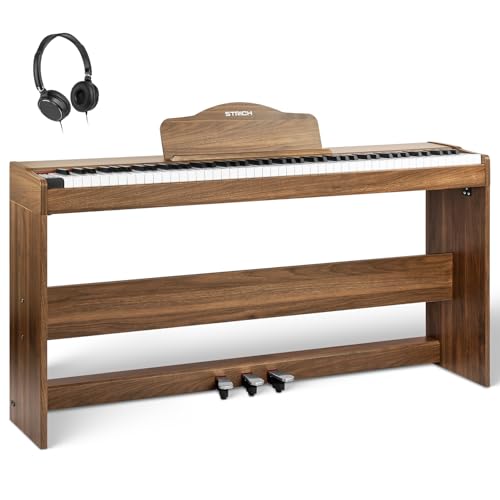
A practical digital piano with fully weighted hammer-action keys and 88 keys, best judged on how the keys feel for the way you play.
Beginner pianos start under £200, the sweet spot for a fully-weighted, good-sounding piano is around £400-500, and premium home and stage pianos run from around £1000 up. You pay more for better action, sound and polyphony.
Around £400-500 is the sweet spot for most learners, buying a fully-weighted 88-key piano with a natural sound. Spend less only to test commitment, and more only for console cabinets, pro features or the best actions.
More realistic key actions, more authentic and expressive sound, higher polyphony, better speakers or connectivity, and furniture cabinets. You do not need to pay for extra voices - spend on action and sound quality.
Our top pick is the Alesis Recital (our score 9.6/10) - A practical digital piano with semi-weighted keys and 88 keys, best judged on how the keys feel for the way you play..