Donner 88-Key Digital Piano vs Roland FP-10
We compare the Donner 88-Key Digital Piano and the Roland FP-10 across every dimension that matters - our scores, the key specs, and how each performs on the things you will actually notice day to day.

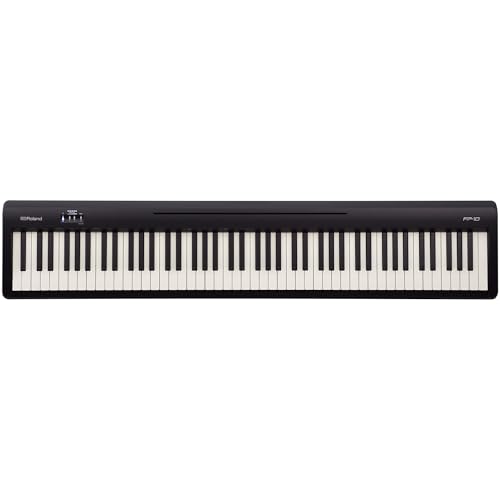
At a glance
| Donner 88-Key Digital Piano | Roland FP-10 | |
|---|---|---|
| Our score | 9.2/10 | 9.1/10 |
| Best for | Beginners and improvers who want a realistic, weighted feel | Casual players and first-timers on a budget |
| Not ideal for | Players wanting a premium acoustic feel or a furniture-style console | Anyone needing fully weighted keys for serious practice |
| Brand | Donner | Roland |
Keys and Action
Donner 88-Key Digital Piano
This digital piano's DEP-20 uses a full-size, full-weighted 88-key hammer-action keyboard. The keys are designed to respond at different touch-sensitivity levels as a player's finger strength changes, supporting expressive playing. The action is presented as aiming to feel closer to an acoustic piano, with frosted-material keys that support expressive playing. The Donner pros and cons include split-mode pairing for dual tones, while the weight and full-size format may feel less portable. Automatic touch adjustment is referenced.
Roland FP-10
This digital piano's FP-10 uses an 88-key layout, and its action is designed to feel like an acoustic piano, with expressive touch and an ivory-feel surface. The keyboard action is a key part of the instrument's real-feel goal, especially for players who practise dynamics and soft-to-loud control. The Roland pros and cons include strong physical response. For practice sessions, the quiet action supports late-hour playing, and the 12.25 kg build helps keep the feel consistent between setups.
Sound and Tone
Donner 88-Key Digital Piano
How does the digital piano handle sound, and what can a player expect from its onboard tones? Sound is delivered via 2 x 25 W stereo speakers, making it suitable for home practice and typical stage use. The instrument includes 238 multi-sampled premium voices, such as Grand Piano and Electric Piano, with up to 128 max polyphony to help prevent notes cutting off. The tone set is designed to maintain consistency by aiming to reproduce real piano sound. Split mode allows two voices to be combined for wider sound-shaping options, while volume control is straightforward; headphone mode may feel more limited.
Roland FP-10
Sound from the digital piano is built around The Roland's piano sound engine, designed to produce a rich, responsive tone that reacts to how the keys are played. This matters because dynamics stay tied to touch rather than feeling fixed. The onboard speakers reproduce playing for room use, while the headphone output supports quiet practice. With the digital piano, softer strikes sound smoother and harder hits sound brighter. Overall, the tonal response supports learning and practice, but extreme sound shaping options are not described.
Built-in Voices and Features
Donner 88-Key Digital Piano
The Donner comes with a large built-in sound set and several onboard practice tools. This 88-key digital piano features 238 multi-sampled voices, including grand piano, electric piano, ukulele, drum and bass, alongside 128 max polyphony to help prevent notes dropping during performance. Split Mode allows two voices to be combined for layered sounds. Built-in controls include a backlit LCD showing chord names, notation and tone adjustments, plus a metronome for timing practice. For recording, the panel supports USB-MIDI, USB-MP3 playback and a sustain pedal interface, though sound editing depth is limited.
Roland FP-10
The Roland FP-10 includes a built-in set of piano-oriented sounds and lesson-friendly features designed for at-home practice. In the Roland, a Piano sound engine supports responsive expression, and lesson support is focused on Twin Piano mode, which lets a student and teacher play side-by-side within shared octave ranges. The Roland FP-10 digital piano also works with the Piano Partner 2 app, which helps select sounds and set a metronome from a smartphone.
Speakers and Volume
Donner 88-Key Digital Piano
With two built-in stereo speakers rated at 2 x 25 W, the digital piano is designed to cover everyday practice needs at home and to handle small room use without extra gear. This matters for owners looking for the Donner DEP-20 alternative, since volume is usually sufficient for living rooms. The Donner listings describe the design as suitable for both home and stage, and note that an audio interface is available for connecting higher powered speakers. Headphone mode helps reduce noise, though it limits how much room sound is heard.
Roland FP-10
The Roland includes built-in speakers, allowing it to play through its own audio without external equipment. These onboard speakers are intended to keep setup simple for home practice and smaller rooms, with quieter listening often handled via headphones. Volume control is managed directly on the piano. When comparing the digital piano price, many shoppers also check This digital piano listings, as bundles and stand options can vary.
Connectivity and Apps
Donner 88-Key Digital Piano
Connectivity on the digital piano supports "alone at home" practice and setups for expanding the sound system. It includes USB-MIDI, a headphone output, and an audio interface, enabling audio routing to higher powered speakers when needed. The DEP-20 also supports Recording Mode, a USB-MP3 player, and sustain pedal input via a 1/4" jack, helping users manage practice material without extra gear. Compared with the broader The Donner, its setup options may feel limited because no phone app control is specified. For the digital piano price, value depends on how much MIDI and USB playback matters.
Roland FP-10
How does the Roland handle modern connections and app support? The FP-10 includes built-in Bluetooth MIDI and a USB MIDI interface, along with a headphone output for private practice. It can connect to GarageBand, computers, and DAW software. The Roland FP-10 app provides sound selection and metronome options using a smartphone. Twin Piano is listed as working with the app's easy control for lessons, and support for the DP-2 foot switch is specified. Overall connectivity supports casual and studio use.
Design and Portability
Donner 88-Key Digital Piano
Design and portability matter for a stage-to-home setup, and this digital piano is built around a practical, beginner-friendly form factor. As the Donner, it weighs 11.6 kg, which helps when transporting between rooms or rehearsals, although a single person may still find lifting awkward. Its matte finish and compact footprint (23.5D x 144.8W x 34H cm) suit tighter spaces, but the piano needs a stand for stable performance. The full-size 88-key layout keeps weighted keys accessible, and the headphone output supports silent practice without moving speakers.
Roland FP-10
Sleek and compact for a full 88-key digital piano, the digital piano is designed to fit home and practice spaces without dominating the room. At 12.25 kg and 40.5D x 138.3W x 28.2H cm, it can be moved when needed, though it is not lightweight for frequent transport. The lacquered black finish looks neat and works in most rooms, and it comes with a stand, headphones, DP-2 foot switch, and sheet rest. For buyers searching for This digital piano best price UK, the size helps simplify setup in a smaller area, but storage still needs clear space.
Who Is This Digital Piano For?
Donner 88-Key Digital Piano
The Donner DEP-20 is aimed mainly at beginners and at players who want a full 88-key hammer-action keyboard that is straightforward to use at home, and also practical enough for occasional practice or simple setups. For many, it fits the best digital piano for beginners label because it includes a built-in metronome, split mode, and a metal sustain pedal. It is also suitable for learners who want varied sounds, since it offers 238 multi-sampled voices and 128 polyphony. More confident players may find some basics limiting, but for start-up use the digital piano for beginners focus is clear.
Roland FP-10
The Roland is a good fit for players who want a full 88-key piano feel at home without needing a heavier stage instrument. It is aimed at beginners as well as returning players looking for a responsive touch, quiet practice, and basic learning features including Twin Piano mode and a metronome via Piano Partner 2. The digital piano can be considered "any good" depending on expectations, because it includes onboard speakers, a headphones output, and supports MIDI connectivity through Bluetooth MIDI and USB-MIDI for GarageBand, computers, and DAWs. It weighs 12.25 kg and ships with a stand, headphones, a DP-2 foot switch, and a rest.
Donner 88-Key Digital Piano: pros
- Hammer-action weighted keys
- 238 built-in voices
- Connectivity: USB-MIDI, headphone output
- Bundle includes pedal, headphones
Cons
- Built-in speakers rarely match headphone sound quality
Roland FP-10: pros
- Full board (88 keys)
- Connectivity: Bluetooth, USB-MIDI, headphone output
- Bundle includes stand, headphones
- Straightforward to set up and play
Cons
- Key action not specified by the manufacturer
- Built-in speakers rarely match headphone sound quality
Our verdict
Our pick is the Donner 88-Key Digital Piano (our score 9.2/10) - A practical digital piano with hammer-action weighted keys, best judged on how the keys feel for the way you play. The Roland FP-10 is still worth it if it is cheaper when you check, or if it better matches your specific needs.