Roland FP-10 vs Yamaha P-145
We compare the Roland FP-10 and the Yamaha P-145 across every dimension that matters - our scores, the key specs, and how each performs on the things you will actually notice day to day.
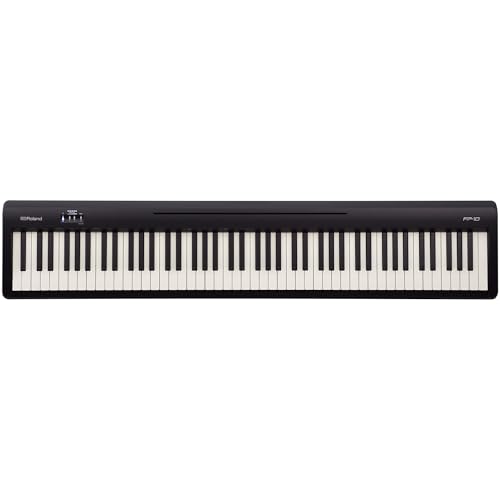

At a glance
| Roland FP-10 | Yamaha P-145 | |
|---|---|---|
| Our score | 9.1/10 | 9.3/10 |
| Best for | Casual players and first-timers on a budget | Beginners and improvers who want a realistic, weighted feel |
| Not ideal for | Anyone needing fully weighted keys for serious practice | Players wanting a premium acoustic feel or a furniture-style console |
| Brand | Roland | Yamaha |
Keys and Action
Roland FP-10
This digital piano's FP-10 uses an 88-key layout, and its action is designed to feel like an acoustic piano, with expressive touch and an ivory-feel surface. The keyboard action is a key part of the instrument's real-feel goal, especially for players who practise dynamics and soft-to-loud control. The Roland pros and cons include strong physical response. For practice sessions, the quiet action supports late-hour playing, and the 12.25 kg build helps keep the feel consistent between setups.
Yamaha P-145
Graded hammer compact keys on this digital piano use a fully weighted action. This gives 88-note coverage in a compact format, aiming for a more realistic piano-style resistance than a light synth-style touch. The Yamaha positions the P-145's weighted response as the key appeal, with a space-saving build measuring 12.9 cm deep and 132.6 cm wide. The main limitation is that compact fully weighted keys can still feel less substantial than full-size piano actions, and the precise key feel remains subjective.
Sound and Tone
Roland FP-10
Sound from the digital piano is built around The Roland's piano sound engine, designed to produce a rich, responsive tone that reacts to how the keys are played. This matters because dynamics stay tied to touch rather than feeling fixed. The onboard speakers reproduce playing for room use, while the headphone output supports quiet practice. With the digital piano, softer strikes sound smoother and harder hits sound brighter. Overall, the tonal response supports learning and practice, but extreme sound shaping options are not described.
Yamaha P-145
Even as a compact beginner digital piano, the digital piano is designed to keep practice-sounding audio clear enough to follow parts and hear dynamics, using 10 quality voices to cover different styles. The sound character is intended to remain understandable at typical home levels, and the tone is described as changing with the player's touch, supported by its graded hammer action feel. The 10 voices help match practice needs, for example piano-focused playing versus other tones. However, a compact unit cannot replace the volume and resonance of a full upright or grand, so expectations should stay realistic.
Built-in Voices and Features
Roland FP-10
The Roland FP-10 includes a built-in set of piano-oriented sounds and lesson-friendly features designed for at-home practice. In the Roland, a Piano sound engine supports responsive expression, and lesson support is focused on Twin Piano mode, which lets a student and teacher play side-by-side within shared octave ranges. The Roland FP-10 digital piano also works with the Piano Partner 2 app, which helps select sounds and set a metronome from a smartphone.
Yamaha P-145
Built into the Yamaha, the main feature set is designed to support beginner practice with simple, practical tools. The instrument includes 10 quality voices for use across different playing styles, with voicing selection intended to cover common sounds without making setup complex. A metronome helps keep time, and a sustain pedal allows smoother note blending for practice passages. A basic recording workflow is supported through the Rec'n'Share app, which is linked with learning over 303 songs. The digital piano vs alternative models may feel limited if a player expects more advanced voice expansion.
Speakers and Volume
Roland FP-10
The Roland includes built-in speakers, allowing it to play through its own audio without external equipment. These onboard speakers are intended to keep setup simple for home practice and smaller rooms, with quieter listening often handled via headphones. Volume control is managed directly on the piano. When comparing the digital piano price, many shoppers also check This digital piano listings, as bundles and stand options can vary.
Yamaha P-145
The Yamaha P-145BUK's speaker and volume setup is designed for everyday practice. The compact design supports portability, with a weight of 12.3 kilograms and a cabinet measuring 26.8D x 132.6W x 12.9H cm. For most rooms, the built-in sound placement is set up to deliver clear, usable listening while practising, although maximum loudness details are not provided. Buyers should rely on personal testing through the Yamaha on Amazon UK, since a volume range is not included.
Connectivity and Apps
Roland FP-10
How does the Roland handle modern connections and app support? The FP-10 includes built-in Bluetooth MIDI and a USB MIDI interface, along with a headphone output for private practice. It can connect to GarageBand, computers, and DAW software. The Roland FP-10 app provides sound selection and metronome options using a smartphone. Twin Piano is listed as working with the app's easy control for lessons, and support for the DP-2 foot switch is specified. Overall connectivity supports casual and studio use.
Yamaha P-145
Connectivity on the digital piano is straightforward, making it easier for beginners to plug in and start playing, although the manufacturer description only specifies an auxiliary connection and does not list any other ports. Pairing it with external sound systems relies on that auxiliary input. For learning, the P-145 supports recording via the Rec'n'Share App, which the manufacturer says provides access to 303 songs. This combination suits the best digital piano uk audience looking for guided practice.
Design and Portability
Roland FP-10
Sleek and compact for a full 88-key digital piano, the digital piano is designed to fit home and practice spaces without dominating the room. At 12.25 kg and 40.5D x 138.3W x 28.2H cm, it can be moved when needed, though it is not lightweight for frequent transport. The lacquered black finish looks neat and works in most rooms, and it comes with a stand, headphones, DP-2 foot switch, and sheet rest. For buyers searching for This digital piano best price UK, the size helps simplify setup in a smaller area, but storage still needs clear space.
Yamaha P-145
Thanks to its compact build, the Yamaha is designed to fit where a traditional upright piano usually cannot, with the main benefit being a small footprint. At 26.8D x 132.6W x 12.9H cm, it is suited to tight rooms, hallways, or shared spaces. The unit weighs 12.3 kg, so moving it is possible for one person, although care is still needed. Painted or lacquered black The Yamaha P-145BUK digital piano styling keeps the look simple. Buyers comparing this digital piano price should note that transport is easier than a full-size upright, but some setup space is still required.
Who Is This Digital Piano For?
Roland FP-10
The Roland is a good fit for players who want a full 88-key piano feel at home without needing a heavier stage instrument. It is aimed at beginners as well as returning players looking for a responsive touch, quiet practice, and basic learning features including Twin Piano mode and a metronome via Piano Partner 2. The digital piano can be considered "any good" depending on expectations, because it includes onboard speakers, a headphones output, and supports MIDI connectivity through Bluetooth MIDI and USB-MIDI for GarageBand, computers, and DAWs. It weighs 12.25 kg and ships with a stand, headphones, a DP-2 foot switch, and a rest.
Yamaha P-145
Because the Yamaha is built to sit in smaller rooms, it is aimed at players who need a practical piano that still provides a weighted feel. It is frequently considered a best digital piano for beginners because it offers 88 weighted compact keys, 10 voices, and a metronome for steady practice. Beginners can record with the Rec'n'Share app and listen back to improve timing, and the included footswitch supports sustain. The Yamaha P-145BUK may feel limited for advanced players seeking more sound and features.
Roland FP-10: pros
- Full board (88 keys)
- Connectivity: Bluetooth, USB-MIDI, headphone output
- Bundle includes stand, headphones
- Straightforward to set up and play
Cons
- Key action not specified by the manufacturer
- Built-in speakers rarely match headphone sound quality
Yamaha P-145: pros
- Graded hammer action (fully weighted)
- Connectivity: Auxiliary
- Compact for home use
- Straightforward to set up and play
Cons
- Stand, bench and pedal may cost extra
- Built-in speakers rarely match headphone sound quality
Our verdict
Our pick is the Yamaha P-145 (our score 9.3/10) - A practical digital piano with graded hammer action (fully weighted), best judged on how the keys feel for the way you play. The Roland FP-10 is still worth it if it is cheaper when you check, or if it better matches your specific needs.