Roland FP-30X vs Roland FP-E50
We compare the Roland FP-30X and the Roland FP-E50 across every dimension that matters - our scores, the key specs, and how each performs on the things you will actually notice day to day.

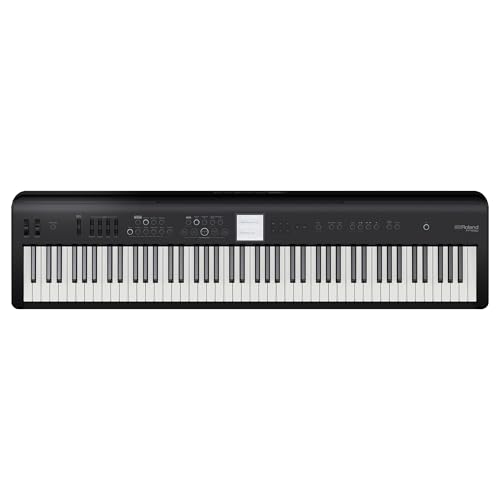
At a glance
| Roland FP-30X | Roland FP-E50 | |
|---|---|---|
| Our score | 8.6/10 | 7.1/10 |
| Best for | Casual players and first-timers on a budget | Beginners and improvers who want a realistic, weighted feel |
| Not ideal for | Anyone needing fully weighted keys for serious practice | Players wanting a premium acoustic feel or a furniture-style console |
| Brand | Roland | Roland |
Specifications compared
| Roland FP-30X | Roland FP-E50 | |
|---|---|---|
| Keys | 88 Acoustic-style touch | 88 notes |
| Weight | 1.49 kg Portable build | 23 kg |
| Warranty | 1 year Standard coverage | 2 years |
Keys and Action
Roland FP-30X
The Roland features an 88-key keyboard built to replicate the feel of an acoustic-style piano. The action is presented as a standard keyboard design aimed at an authentic acoustic touch, with an even response across the range that supports expression from pianissimo to fortissimo. Portability is addressed for daily use, while the action is not described in deeper technical terms, so specific limits in feel consistency are not stated.
Roland FP-E50
With its 88-note weighted hammer-action keyboard, the Roland is designed for players who want an acoustic-style feel rather than a light, synth-style action. The action is described as Standard 88-note hammer-action, aligning with the FP approach to responsive keys for piano practice. Players who already prefer weighted dynamics should find the key travel and feel familiar, particularly for sustained phrases and softer passages. Those expecting a different action type, such as lighter semi-weighted designs, may need time to adjust. Overall, the action supports learning, performing, and writing music.
Sound and Tone
Roland FP-30X
Sound and tone are produced by a piano sound engine built for a wide dynamic range, with expression spanning from pianissimo to fortissimo. The sound is described as focused on realistic control rather than simply delivering a consistent, flat volume level. The onboard speakers are specified as a 22-watt stereo system, designed to fill a room, although the results vary depending on room size and placement. A dedicated desktop setting is included to improve the sound when used on a desk. For headphones, the setup lists a headphone output only, while Bluetooth audio support is included, although Bluetooth headphones are not supported.
Roland FP-E50
Sound and tone on the digital piano centre on The Roland's Piano sound engine and its expandable ZEN-Core sound engine, which together aim to cover both acoustic-style piano needs and wider music-making tasks. The Piano sound engine is designed for an authentic grand piano feel, while ZEN-Core adds 1018 onboard sounds, including synthesizers, orchestral and world instruments, guitar, bass and drums, with more possible via The digital piano packs. For buyers weighing the roland fp-e50 price, the blend supports solo practice and layered composing, though sound variety depends on downloaded expansions.
Built-in Voices and Features
Roland FP-30X
Built-in voices and features on the digital piano are designed to provide more than just acoustic piano sounds, while keeping the setup suitable for everyday practice. As the Roland digital piano, it offers a range of onboard sounds including electric pianos, organs, strings, and synthesizers. Expression is improved from pianissimo to fortissimo. The Piano Partner 2 app supports sound selection and metronome settings from a smartphone or tablet. For the digital piano pros and cons, the instrument is flexible but does not support Bluetooth headphones. Bluetooth audio and MIDI, as well as USB-MIDI, support pairing with mobile devices.
Roland FP-E50
Built into the Roland FP-E50 is a piano-and-entertainment focused set of voices and features for learning, performing and writing music. It includes 1018 onboard sounds from the expandable ZEN-Core engine, covering synths, orchestral, world, guitar, bass and drums. Players can use interactive accompaniments with professional styles, plus additional Z-Style Packs, EXZ Wave Expansions and SDZ Sound Packs through The Roland. A mic input supports vocal effects, including real-time harmonies and voice transformer sounds. Bluetooth headphones are not supported. The Piano App supports sound choice and metronome setup.
Speakers and Volume
Roland FP-30X
Speaker performance matters because it affects how well the FP-30X fills a room during practice or when playing along with recordings. The built-in 22-watt stereo speaker system is designed to deliver room-filling sound. The Roland FP-30X vs, the key strength is straightforward loudness for typical home practice, particularly when the piano is set on a desktop. A dedicated desktop sound setting is intended to balance output for that placement. The tradeoff is limited headroom in larger, open spaces, where external speakers may be needed. At 1.49 kg, the piano is easy to move, while maintaining the integrity of the onboard speaker design.
Roland FP-E50
Quietly, the digital piano is designed to produce sound through its built-in speaker system, with an overall output level intended for typical home practice and casual performance. The Roland digital piano is suited to small rooms, where the built-in speakers can handle practice sessions without external amplification. For louder use, the unit supports headphone listening, which can help when neighbours or family are nearby. For more balanced sound, the keyboard volume can be adjusted to match room size and playing style.
Connectivity and Apps
Roland FP-30X
Connectivity on the Roland is designed to help pair with other devices without adding extra cables. It supports Bluetooth along with USB-MIDI, which is useful for phone, tablet and computer setups. Bluetooth supports audio and MIDI for sending parts to compatible apps, while Bluetooth headphones are not supported. USB-MIDI offers a direct alternative when a stable connection is needed. The Piano Partner 2 app supports selecting sounds and setting the metronome from a smartphone or tablet, which streamlines practice.
Roland FP-E50
After looking at how volume and speakers affect day-to-day use, the next step is how the FP-E50 connects to other devices, since that shapes learning, recording and music-making. Bluetooth supports audio and MIDI for mobile interfacing, while USB-MIDI works for computer setups, and the headphone output supports private practice. The digital piano can manage sound selection and the metronome from a smartphone, which supports practice at home and in lessons. One limitation is that Bluetooth headphones are not supported, so a 6.35mm-style headphone jack remains the way to listen.
Design and Portability
Roland FP-30X
The digital piano keeps the focus on easy everyday use, and its physical set-up supports that aim. It weighs 1.49 kg and measures 28.4D x 130W x 15.1H cm, which makes it suitable for smaller rooms and straightforward transport. Its slim, styled build is designed for desktop placement, so changing the location is less disruptive. For buyers comparing the roland fp-30x price to practical expectations, the overall priority is the most accessible digital piano niche built around portability and simple positioning. It is a single unit, so travel depends on how it is carried. It also lacks Bluetooth headphone support (Bluetooth audio and MIDI only).
Roland FP-E50
Design choices on this digital piano emphasise a compact stage-to-home fit, with a streamlined front panel for day-to-day control. At about 23 kilograms, it is portable for most users, though frequent moving may require lifting. The dimensions are 130D x 32.2W x 17.4Hcm, designed to suit desks and living rooms, with a black painted finish that keeps the front looking tidy. For the Roland buyer looking at the best digital piano UK options, the minimal control layout supports quick setup, while deeper functions rely on the app and menus. Bluetooth audio and Bluetooth MIDI support help with placement flexibility.
Who Is This Digital Piano For?
Roland FP-30X
Who is the Roland for, in practical terms? It is aimed at people who want an 88-key portable digital piano with standard acoustic-style touch, plus Bluetooth for audio and MIDI connections to phones or tablets. It suits beginner-focused use where the priority is straightforward app control and room-filling sound, with a richer expression-focused piano sound engine and a 22 W stereo speaker system. It also fits desktop setups thanks to a dedicated sound optimisation, which helps tailor the output for closer listening.
Roland FP-E50
The compact, desk-friendly layout and the weight of about 23 kilograms mean the Roland FP-E50 suits spaces where room is limited and where day-to-day control matters. It is a practical option for regular practice, particularly for learners who want an 88-note, hammer-action keyboard and authentic grand piano sound. It can also suit home sessions thanks to headphone output and mic input support, alongside Bluetooth audio/MIDI connectivity with mobile devices. It may be less ideal for players who need battery power or room-filling amplification.
Roland FP-30X: pros
- Full board (88 keys)
- Connectivity: Bluetooth, USB-MIDI, headphone output
- Compact for home use
- Straightforward to set up and play
Cons
- Key action not specified by the manufacturer
- Stand, bench and pedal may cost extra
- Built-in speakers rarely match headphone sound quality
Roland FP-E50: pros
- Hammer-action weighted keys
- Full board (88 keys)
- Connectivity: Bluetooth, USB-MIDI, headphone output
- Straightforward to set up and play
Cons
- Stand, bench and pedal may cost extra
- Built-in speakers rarely match headphone sound quality
Our verdict
Our pick is the Roland FP-30X (our score 8.6/10) - A practical digital piano with 88 keys, best judged on how the keys feel for the way you play. The Roland FP-E50 is still worth it if it is cheaper when you check, or if it better matches your specific needs.